Warehouse to Customer: Un...
In today's fast-moving business environment, getting...
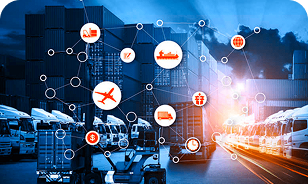
The logistics and transportation industry is experiencing a significant digital transformation. Technology is changing how goods are stored, tracked, transported and delivered, helping businesses build faster, more transparent and efficient supply chains.
From artificial intelligence and automation to GPS tracking, cloud platforms and data analytics, modern technologies are helping logistics companies respond to growing customer expectations while managing increasingly complex operations.
Traditional logistics operations often depended heavily on paperwork, manual inventory records, phone calls and spreadsheets. As businesses grow, these processes can become difficult to manage and may lead to delays, errors and limited visibility.
Today, digital logistics systems connect warehouses, transportation providers, suppliers and customers. Businesses can access real-time information, monitor shipments and make faster decisions based on accurate data.
This transformation is creating a more connected and responsive logistics ecosystem.
Real-time tracking has become one of the most important technologies in modern transportation.
GPS-enabled vehicles and digital tracking platforms allow businesses to monitor shipments while they are in transit. Instead of waiting for a delivery confirmation, logistics teams can see the progress of shipments and identify potential delays.
Real-time tracking can help businesses:
Greater visibility helps businesses manage transportation more effectively and provides customers with a more reliable delivery experience.
Artificial Intelligence (AI) is becoming increasingly important in logistics. AI systems can process large amounts of data and identify patterns that can support better decision-making.
AI can be used for:
For example, businesses can analyse previous sales and inventory data to predict future demand. This can help reduce excess inventory while lowering the risk of stock shortages.
AI can also help logistics operators identify more efficient transportation routes based on factors such as distance, traffic and delivery schedules.
Warehouse automation is changing how products are received, stored, picked, packed and dispatched.
Modern warehouses can use barcode scanners, automated sorting systems, robotics and warehouse management software to improve efficiency and accuracy.
Automation can help streamline:
By reducing repetitive manual tasks, automation can allow warehouse employees to focus on activities that require greater attention and decision-making.
Inventory accuracy is essential for an efficient supply chain.
Warehouse Management Systems (WMS) provide businesses with digital tools to monitor products as they move through a warehouse. Instead of relying completely on manual records, warehouse teams can use software to track stock levels and movements.
A WMS can help businesses:
Better inventory visibility also helps businesses make informed decisions about purchasing and storage.
Transportation costs can represent a significant part of a company's logistics expenses.
Modern route optimisation software can analyse delivery locations, traffic conditions, vehicle capacity and schedules to identify more efficient routes.
Better route planning can potentially help businesses:
For companies managing multiple deliveries every day, even small improvements in route planning can have a significant operational impact.
Cloud-based platforms allow logistics information to be accessed from different locations and devices.
Instead of maintaining separate systems for different departments, businesses can use connected cloud platforms to share information between warehouses, transportation teams, suppliers and management.
A connected supply chain can look like:
Supplier → Warehouse → Transportation → Distribution → Customer
When information flows smoothly between each stage, businesses can respond more quickly to changes and potential problems.
Modern logistics operations generate huge amounts of data.
Information about inventory, deliveries, transportation costs, customer orders and warehouse performance can be analysed to identify opportunities for improvement.
Data analytics can reveal:
Instead of making decisions based only on assumptions, businesses can use actual operational data to improve their logistics strategies.
The Internet of Things (IoT) allows physical devices and equipment to collect and exchange data.
In logistics, IoT technology can be used in vehicles, warehouses and shipments to monitor different operational conditions.
Depending on the application, sensors can provide information about:
This creates greater visibility and can help logistics teams respond to problems more quickly.
Customer expectations have changed significantly. People increasingly want faster deliveries, accurate tracking and clear communication.
Technology allows businesses to provide customers with:
A better logistics experience can contribute to increased customer satisfaction and stronger customer relationships.
Third-party logistics providers are also benefiting from modern technology.
A technology-enabled 3PL operation can combine warehousing, inventory management, transportation and fulfilment through connected systems.
For businesses, this can make it easier to outsource logistics operations while maintaining visibility over their inventory and shipments.
Technology-driven 3PL solutions can be particularly useful for:
Container transportation is an important part of international and domestic supply chains.
Digital systems can improve visibility throughout the container movement process. Businesses can monitor shipment information, coordinate transportation and plan warehouse receiving more effectively.
Better coordination between ports, transportation providers and warehouses can help reduce unnecessary delays and improve the movement of goods.
Technology is providing businesses with several important advantages.
Automation and digital workflows can reduce repetitive tasks and improve operational efficiency.
Digital systems can reduce errors associated with manual data entry and inventory management.
Real-time tracking and connected platforms provide better visibility across the supply chain.
Route optimisation, inventory planning and warehouse automation can help businesses identify opportunities to reduce unnecessary expenses.
Access to real-time data allows businesses to respond more quickly to operational changes.
Accurate tracking and improved delivery management can create a more reliable customer experience.
Although technology offers significant advantages, implementation can also present challenges.
Businesses may need to consider:
Successful digital transformation therefore requires more than purchasing new software or equipment. Businesses need a clear strategy and appropriate training to ensure that technology delivers measurable results.
The future of logistics is likely to become increasingly automated, connected and data-driven.
Technologies such as artificial intelligence, robotics, IoT, predictive analytics, autonomous systems and cloud platforms will continue to influence the industry.
However, human expertise will remain essential. Technology can provide data and automation, but experienced professionals are still needed to make strategic decisions, manage exceptions and build effective supply chain relationships.
The most successful logistics operations will combine technology, skilled people and efficient processes.
Technology is revolutionizing the logistics and transportation industry by creating supply chains that are faster, smarter and more connected.
Real-time tracking, artificial intelligence, automation, warehouse management systems, IoT, cloud technology and data analytics are helping businesses improve visibility, reduce inefficiencies and respond more effectively to changing customer expectations.
As technology continues to evolve, businesses that embrace digital logistics solutions will be better positioned to manage growing operational complexity and compete in an increasingly demanding marketplace.
The future of logistics is not simply about moving goods from one place to another. It is about creating a connected, intelligent and flexible supply chain that can move at the speed of modern business.
Discover our logistics, warehousing, fulfillment and supply chain solutions designed to support businesses of every size.

From a single parcel to full truckloads. we ensure your shipments reach their destination - safely and on time.

we get back to you within one business day.

Your goods are protected every step of the way.

Dedicated logistics specialists ready to help
Welcome to WhatsApp Chat and Share. Contact us if you need help.
Oprational Manager All Sales